


Face Lifting
by Artisan
If your aesthetic doctor never mentioned your Extra-Cellular Matrix, you may be renovating a house with no pillars.
CellREDM replaces lost ECM with real human dermal matrix. Then your own fibroblasts rebuild it, so the lift comes from structure, not water.



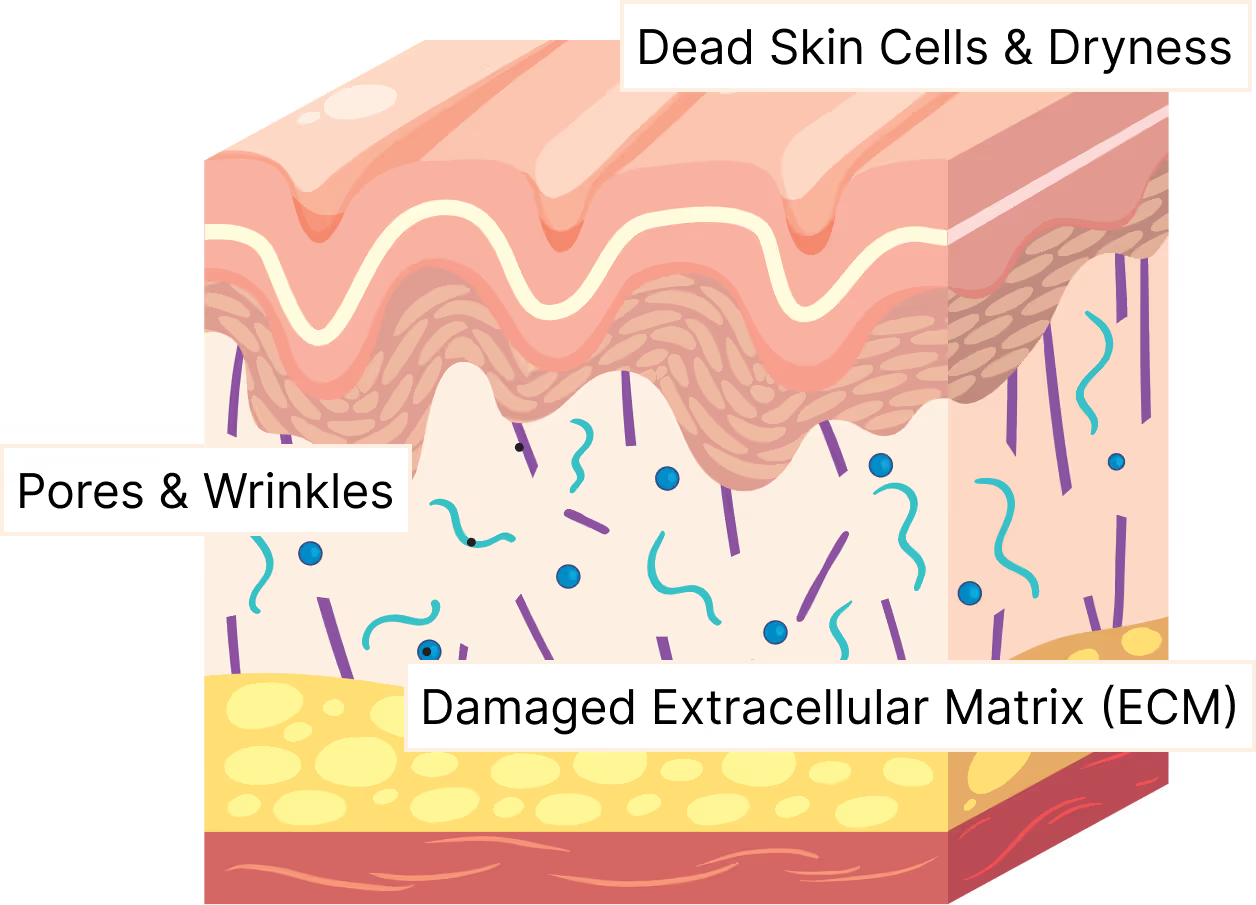
Your skin is a house. The ECM is the pillars.
The Extra-Cellular Matrix is the scaffold every skin cell lives in. From your 20s, dermal collagen falls by about 1% a year.11
Fillers repaint the roof. HA boosters add water. Almost nothing rebuilds the pillars.
Young skin keeps its pillars, springs and builders. In aged skin the pillars crack, the roof sags and the builders go idle.
The same picture, inside your dermis
At 25 the collagen bundles are dense and continuous, elastin coils between them, and fibroblasts are stretched and working. By 55 the bundles are fragmented, the dermis is thinner and the surface has started to crease.
Why most treatments miss the pillars
Every booster you have heard of does one of two things. Only one class puts the matrix itself back.
HA boosters
Add water. Skin looks plumper for a few months, then the hydration fades and nothing structural is left behind.
Collagen stimulators
PLLA, CaHA and PDRN send a signal and rely on a controlled inflammatory reaction to make your fibroblasts work harder.
ECM booster
Replaces the pillars with real human collagen, elastin and GAGs, then lets your own fibroblasts regenerate the scaffold. That is CellREDM.
The builders only build under tension.
Fibroblasts make collagen when they can grip intact fibrils and pull. Cut the fibrils and they lose their grip, collapse, and switch to making MMP-1, the enzyme that destroys collagen.1
Stretched cells build. Collapsed cells degrade.
The same fibroblast behaves young or old depending on what it has to hold on to.1
A loop that feeds itself.
Less collagen means more fragments and more collapse. Fragments even raise oxidative stress inside the cell.2 That is why 45 looks so different from 38.
What cracks the pillars
Six everyday forces raise MMP-1 or slow collagen production. They stack, and most of us are running several at once.
Sugar
Glycation forms AGEs that glue collagen fibres stiff and brittle.8
Smoking
More collagen-degrading enzymes and less oxygen reaching the dermis.9
Chronic inflammation
Inflammatory signals switch on the enzymes that break collagen down.
Hormone decline
Skin collagen falls by about 2% a year after menopause.10
Poor sleep and stress
Raised cortisol slows the repair your skin does overnight.
Protect the pillars. Then rebuild them.
Protect
Daily, inexpensive and proven. Each habit lowers MMP-1 or supports new collagen.
Rebuild
Give the builders something to hold. Restoring dermal support re-stretches collapsed fibroblasts and switches collagen production back on, even in skin over 70.3
CellREDM goes further: it is collagen.
How CellREDM rebuilds the pillars
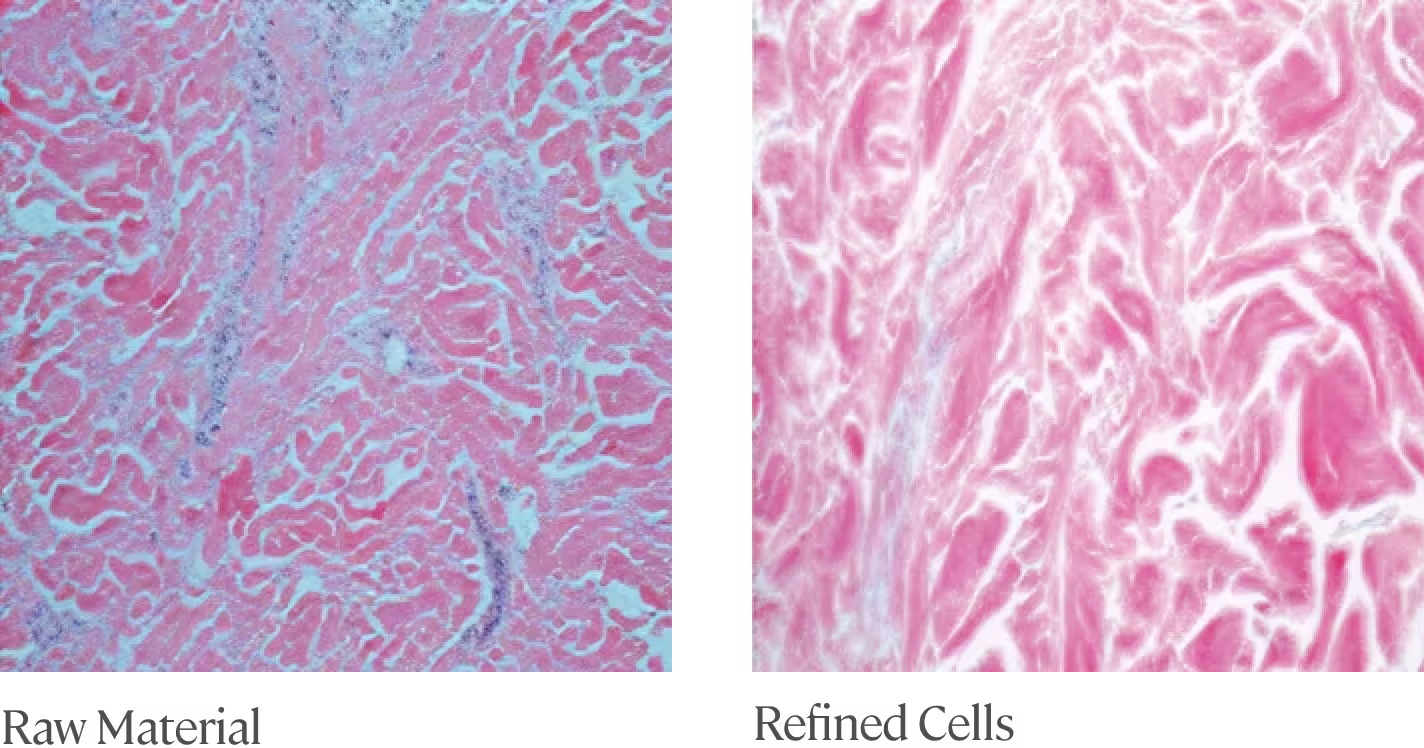
CellREDM is human acellular dermal matrix: donated dermis with every cell removed and the structural framework kept. It replaces the ECM directly, then your own fibroblasts move in and regenerate it.
Inside the matrix: a 6-month in-vivo study
Hans Biomed human ADM (SureDerm HD), the matrix technology behind CellREDM, compared with AlloDerm in a rat model.6
Lift from the sides, not the middle.
A young face is a heart: widest at the cheekbones, tapering to the chin. Where you place a treatment decides whether you keep that shape or lose it.
Filling the middle: Facial Overfilled Syndrome
Hyaluronic acid placed in the medial and middle face, the inner cheeks, nasolabial folds, lips and chin, adds weight where the face is already heaviest. HA holds water, and with repeated top-ups it accumulates. The load overwhelms the retaining ligaments that hold the soft tissue up, the midface protrudes on expression, contours blunt, and the face widens and rounds into the pillow look clinicians now call Facial Overfilled Syndrome.12
The signs are recognisable, from a flattened light reflex to the taurus philtrum pattern Dr Isaac Wong described in the Aesthetic Plastic Surgery literature.13 More volume in the middle inverts the heart.
Anchoring the sides: the Lady Heart lift
Also called the Outer Contour Lifting Technique. Instead of filling the middle, CellREDM is placed along the lateral face, at the periosteum, the fascia and the retaining ligaments of the temple, zygomatic arch, pre-auricular and jawline regions.17
The matrix integrates into those ligaments and fascia and your fibroblasts redensify them with new collagen. Redensified ligaments shorten and stiffen, and that tensile tightening supports and lifts the face the way re-tensioned guy ropes lift a tent. It is a lift by tension, not a fill, so the heart shape returns, expressions stay natural, and nothing is added where overfilling begins.
The lateral, ligament-anchoring principle is published with collagen stimulators: lateral placement lifts by strengthening ligamentous structures and redistributing facial tension while avoiding overfilling.14,15 CellREDM applies it with human matrix.
In patients, human ADM beat HA at 20 weeks.
A randomised, double-blind split-face trial at Yonsei University put human ADM on one side of the face and an HA booster on the other, measured with ultrasound, 3D imaging, Cutometer and Tewameter.7
The trial used a human ADM of the same class as CellREDM, not CellREDM itself.
Collagen, without the inflammation
Most collagen stimulators work by provoking a controlled inflammatory reaction. Human ADM did the opposite. In activated macrophages it lowered IL-1β, IL-6, TNF-α and PGE-2, and in patients redness fell on the matrix side over 20 weeks while it rose on the HA side.7
That is why we reach for it on sensitive, easily flushed skin.
CellREDM’s own clinical evaluation
Five markers of skin quality, measured before treatment and at four weeks. Every result was statistically significant against baseline.
Lifted. Glowing. Calmer.
Rebuilding the ECM changes how skin carries its weight, holds its water and reacts.
Where it goes, and how it is combined
For lifting, the matrix is placed at the lateral anchor points. For skin quality, it is spread through the dermis of the face, eyes and neck.
Pairs with lifting treatments
When combined in one session, the order matters:
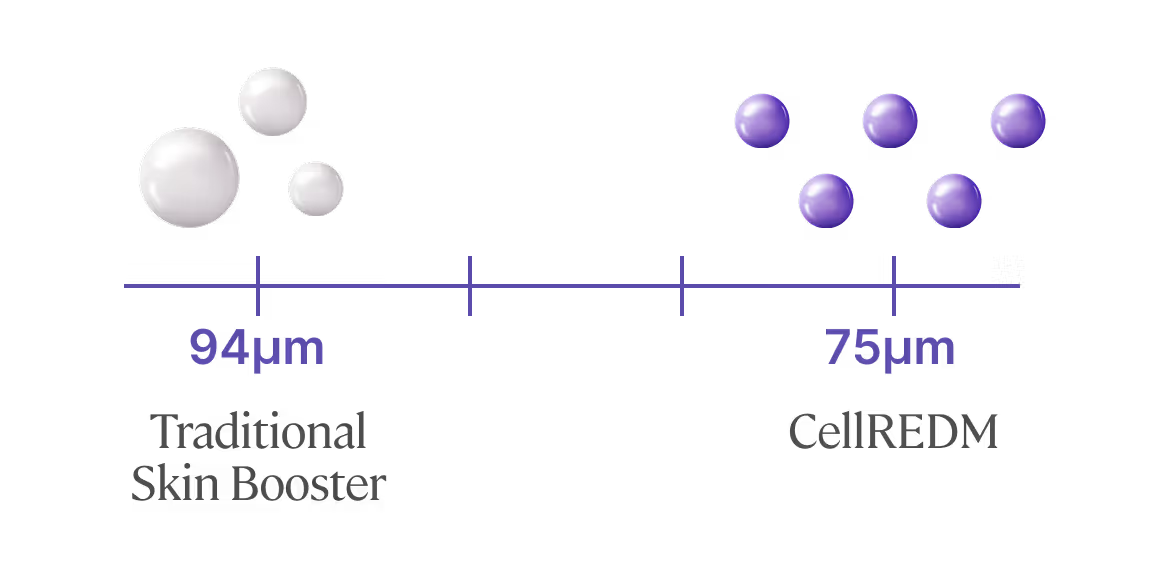
Two things change. First, dilution. CellREDM arrives as a powder and is reconstituted in clinic. Mixing it in less liquid instantly raises its concentration, so each deposit carries more collagen, elastin and GAGs and far more structural, lifting capability than a skin-booster dilution.
Second, placement. Instead of spreading it through the dermis, it goes to the ligamentous anchor points of the lateral face in the Lady Heart / Outer Contour Technique. Redensified ligaments and fascia tighten, and that tension lifts the face.
Reactions are usually mild and short-lived:
- Redness and swelling, settling within 12 to 72 hours
- Bruising, where it occurs, typically 3 to 10 days
- Tenderness at injection sites for 1 to 3 days
- Small temporary bumps for a few hours to a few days as the fluid is absorbed
For 24 to 48 hours, avoid strong sun, saunas, strenuous exercise and active topicals such as retinoids or strong AHAs.
- Pregnant or breastfeeding, or under 18
- Immunocompromised, or with a systemic autoimmune condition or severe allergies
- Known sensitivity to human-derived tissue products
- Allergy to penicillin, streptomycin, gentamicin or amphotericin B, which are used in manufacture
- Active infection or inflammation at the treatment site
- History of keloid scarring, a bleeding disorder, or recent isotretinoin
Your doctor will go through your medical history at consultation.
The full face, the area around the eyes, and the neck and décolletage are most common. The hands, abdomen and other body areas suit concerns about skin quality rather than volume.
Stop decorating. Rebuild the pillars.
Book an ExtraCellular Matrix LIFT consult with Dr Isaac Wong at The Artisan Clinic, Wisma Atria. We map your dermis, build your protection plan, and tell you whether CellREDM is right for your skin.
References
Individual results vary. This page is educational and is not a substitute for a medical consultation.
✔ Those whose skin is losing firmness and lift as collagen declines with age
✔ Those who want a lift from the sides of the face, not more volume in the middle
✔ Those concerned about looking overfilled after repeated filler top-ups
✔ Those with sensitive, easily flushed skin who want collagen support without an inflammatory reaction
✔ Those who want a result built on their own new collagen, not water


At The Artisan Clinic, all our doctors are well-trained professionals.
We keep ourselves up to date with latest trends and updates in the Aesthetic medicine field by being constantly involve and participating in seminars and conferences around the world.
Our Medical Director, Dr. Isaac Wong is an international trainer, and is often invited to speak in international conferences.
All treatments by The Artisan Clinic doctors are carefully curated by our Medical Director, Dr. Isaac Wong.


Lift by tension, not volume
CellREDM is placed along the ligaments at the sides of the face. As your own fibroblasts redensify them with new collagen, they tighten and lift, and nothing is added where overfilling begins.
Built from your own collagen
The matrix replaces lost ECM directly, then your fibroblasts move in and regenerate it. The lift comes from structure, not water.
Collagen without the inflammation
Most collagen stimulators rely on a controlled inflammatory reaction. In studies, human ADM lowered inflammatory markers instead, which is why we reach for it on sensitive, easily flushed skin.
A natural, heart-shaped contour
Anchoring the sides keeps the face widest at the cheekbones and tapering to the chin, so expressions stay natural and the face doesn't widen or round.
Aging is inevitable but you can choose to age gracefully.
Naturally healthy skin
Enhance facial contours
Thicker, fuller hair
Restore youthful looks
Fair and dewy skin
Body slimming
Dr. Isaac Wong
Beauty Reborn At The Artisan Clinic Everyday
Dr Isaac Wong is the Founder and Medical Director of The Artisan Clinic, an international trainer in aesthetic medicine. Dr Isaac Wong's work in injectables, threadlifts, and energy-based devices has led to invitations as a speaker at global conferences and appointments as a regional trainer for some aesthetic brands.


