


ECM Boosters Explained: CellREDM vs. Re20
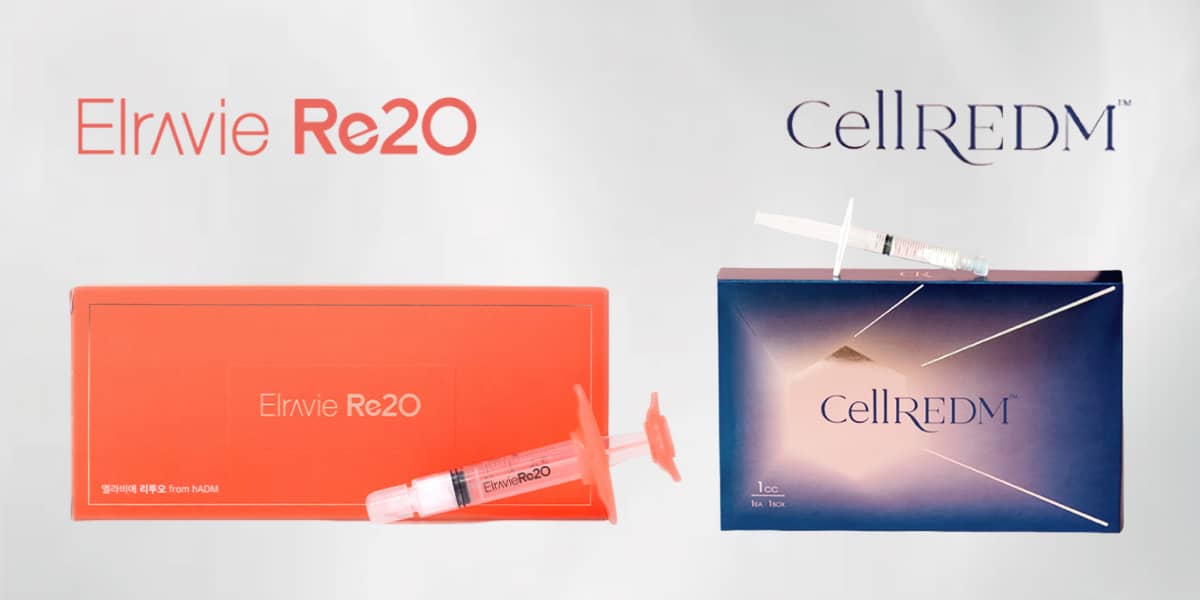
As the dry season approaches, inquiries about certain skin treatments tend to spike — and one category drawing particular attention right now is the ECM booster. More people are moving beyond surface-level concerns like hydration and radiance, toward treatments that target the skin's internal structure. Here is what you need to know.
ECM Boosters vs. Traditional Skin Boosters
To understand the difference between CellREDM and Re20, it helps to first understand what makes an ECM booster distinct from a conventional skin booster.
Traditional skin boosters work by stimulating collagen production. ECM boosters go a step further — they directly supplement collagen.
The extracellular matrix (ECM) is the structural framework of the dermal layer, composed of collagen, elastin, and other components that keep skin firm and intact. Over time, aging, UV exposure, and environmental stress gradually break this structure down, leading to sagging and wrinkles.
While traditional boosters encourage the skin to rebuild collagen on its own, ECM boosters are designed to restore and reinforce that structure directly. Think of it like repairing both the framework and the bricks of a house at the same time — as both the internal and external layers improve together, the skin develops enhanced elasticity, density, and texture.
The Core Difference: Particle Size
Both CellREDM and Re20 are derived from dermal tissue (hADM), but they differ meaningfully in particle size and structure.
Re20
- Particle structure: Micro-particle formulation
- Particle size: 100 µm
- Primary effects: Improving facial elasticity lines and offering immediate contour enhancement
- Characteristics: Particles tend to remain concentrated in the dermal layer to support structural reinforcement
CellREDM
- Particle structure: Nano-particle formulation
- Particle size: 75 µm
- Primary effects: Improving skin structure, texture, and density
- Characteristics: Smaller particles disperse more smoothly and evenly through the skin, resulting in gentler hydration and reduced injection resistance
Because CellREDM's particles are approximately 25 percent smaller than those in Re20, the product distributes more uniformly and typically causes less discomfort during injection.
What Each Treatment Does
Re20
- Helps restore facial elasticity lines
- Provides immediate improvement in facial contours
CellREDM
- Enhances skin density and overall texture
- Helps fill and reinforce hollow structural areas
- Delivers gradual, natural-looking improvement over time
Both treatments aim to strengthen the skin's foundation, but the type of improvement each offers is distinct.
How to Choose
If you are weighing one against the other, these general guidelines can serve as a starting point:
- CellREDM is typically preferred for improving skin elasticity and density
- Re20 is generally chosen for enhancing facial contours and achieving a more immediate lifting effect
That said, these are not hard rules. Selecting the right treatment requires a thorough understanding of each product's mechanism, an honest assessment of your skin condition, and consideration of your personal goals. A consultation with a qualified professional is always the most reliable way to determine which approach suits you best.
Choosing the right product matters — but technique matters just as much.
ECM boosters must be distributed evenly within the dermal layer to effectively improve the skin's internal structure. An experienced injector with a precise, methodical approach will have a significant impact on the quality and longevity of your results.
As interest in structural skin treatments continues to grow, CellREDM and Re20 represent two well-differentiated options within the ECM booster category. Understanding what sets them apart is the first step toward making an informed decision.


